
System Epigenomics
Systems Epigenomics & Comparative Analysis
Systems epigenomics integrates genome-wide methylation data with other molecular layers to understand gene regulation at scale. This integrative approach reveals how epigenetic variation drives phenotypic diversity.
Epigenome-Wide Association Studies (EWAS)
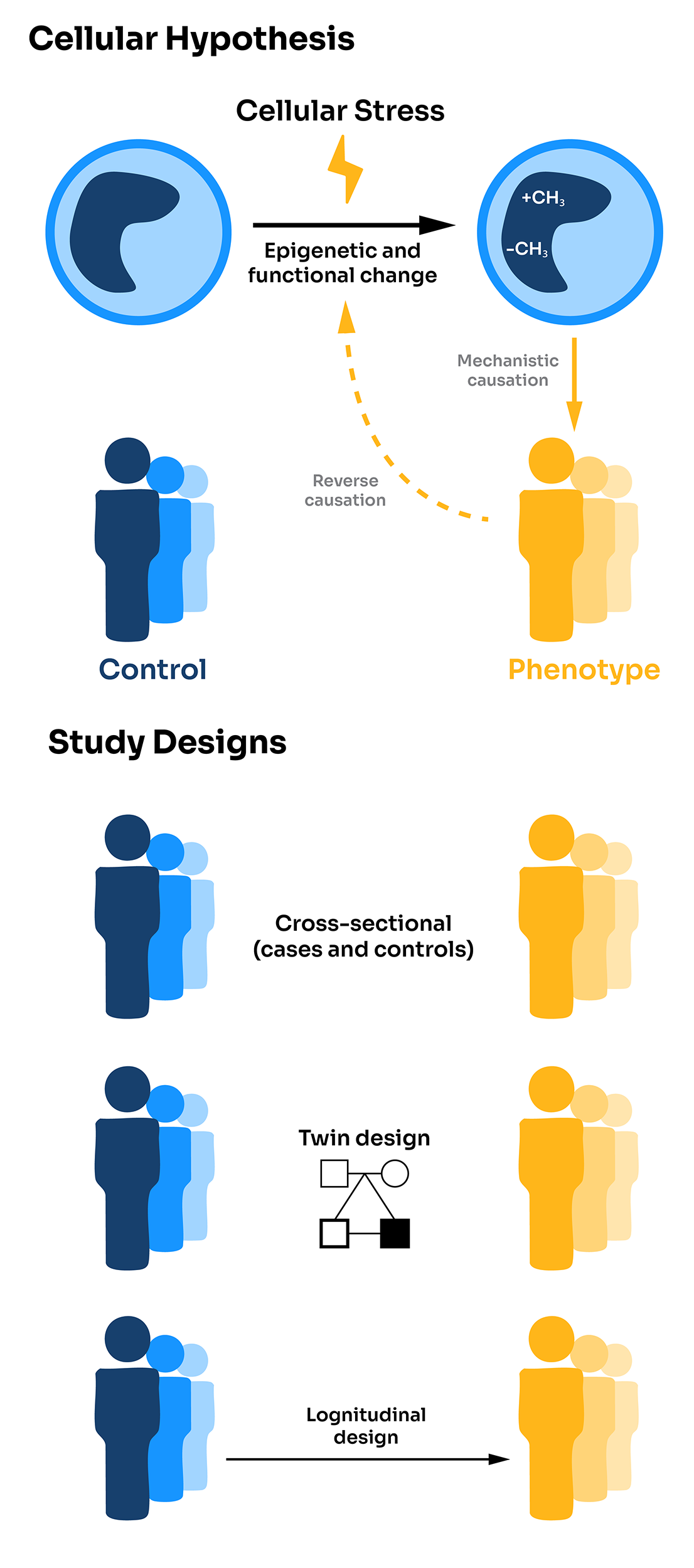
EWAS extends GWAS principles to methylation, examining associations between CpG methylation and phenotypes or exposures.
- Disease risk assessment (cancer, cardiovascular, metabolic)
- Environmental exposure effects monitoring
- Drug response prediction
- Epigenetic biomarker identification
Comparative Epigenomics
Cross-species and cross-tissue methylation comparisons reveal:
- Conservation of epigenetic regulation in orthologous regions
- Species-specific methylation patterns and evolutionary significance
- Tissue-specific regulatory architecture
- Common principles of epigenetic gene regulation
Epigenetic Editing & Therapeutic Applications
Emerging technologies enable targeted epigenetic modifications:
- dCas9-based epigenetic editors: Recruit methyltransferases to specific loci. Gene regulation rewiring
- Small molecule DNMT/TET inhibitors: Modulate methylation enzymes. Cancer treatment and methylation reversal
- CRISPR epigenetic prime editors: Precise methylation without sequence change. Disease-causing mutation correction
Ellis Bio SuperMethyl™ Kits for Systems Epigenomics
SuperMethyl™ Max Kit – For Comprehensive Methylome Profiling
Exceptional DNA Integrity with ultra-mild conditions minimizes fragmentation and maximizes genomic coverage. Uniform Coverage and Complete Conversion ensures accurate CpG quantification with minimal bias across the entire genome. Best For: EWAS cohorts, comparative epigenomics projects, and systems-level methylation studies.
SuperMethyl™ Fast Kit – For Large-Scale EWAS Studies:
The ultra-Fast bisulfite conversion step (7 mins) and total protocol time of less than one hour enables much faster workflows for large-cohort studies. Maintains high conversion efficiency and minimal bias in high-throughput formats. Best For: EWAS studies with thousands of samples, population-level cohort analyses, and comparative epigenomics.
References
- Rakyan VK, Down TA, Balding DJ, et al. Epigenome-wide association studies for common human diseases. Nat Rev Genet. doi: 10.1038/nrg3000.
- Zhou H, Clark E, Guan D, et al. Comparative Genomics and Epigenomics of Transcriptional Regulation. Annu Rev Anim Biosci., 2025. doi: 10.1146/annurev-animal-111523-102217.
- Thakore PI, Black JB, Hilton IB, et al. Editing the epigenome: technologies for programmable transcription and epigenetic modulation. Nat Methods. 2016. doi: 10.1038/nmeth.3733.