
Aging and Longevity
Epigenetic Aging & Longevity Research
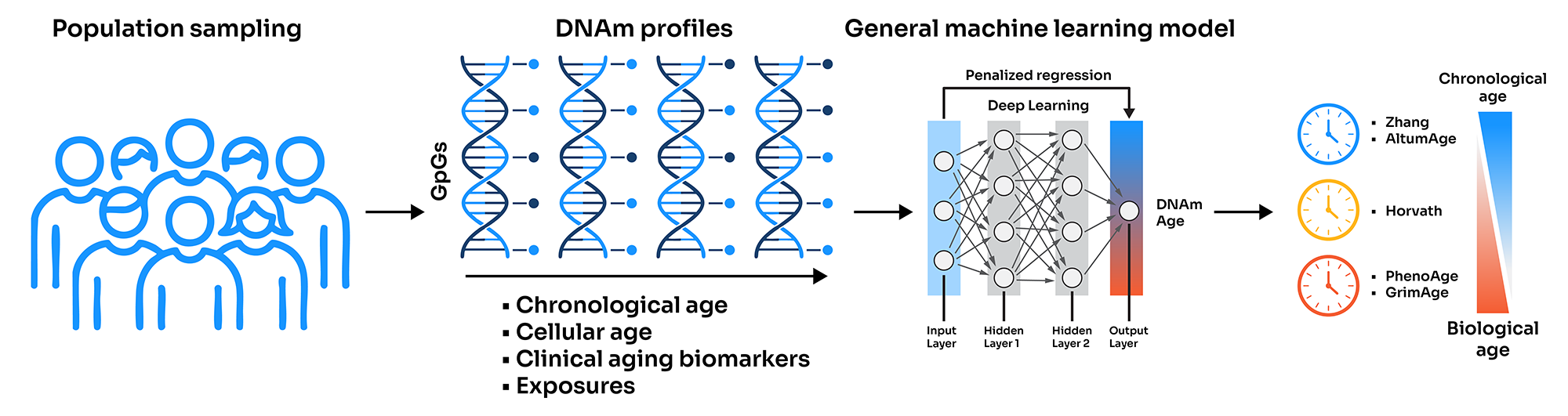
Biological age, measured through DNA methylation patterns, often diverges from chronological age. This “epigenetic age acceleration” is associated with disease risk, mortality, and healthspan. Methylation-based clocks enable quantitative assessment of aging at the molecular level.
Epigenetic Aging Clocks
Multiple validated clocks exist, each measuring different aspects of aging:
- Horvath Clock: 353 CpG sites (Multi-tissue). General age prediction; tissue-agnostic aging measure. (2013)
- Hannum Clock: 71 CpG sites (Blood-based). Faster analysis; hematopoietic aging focus. (2013)
- GrimAge: 1,030+ CpG sites (Blood-based). Mortality predictor; disease outcome association. (2018)
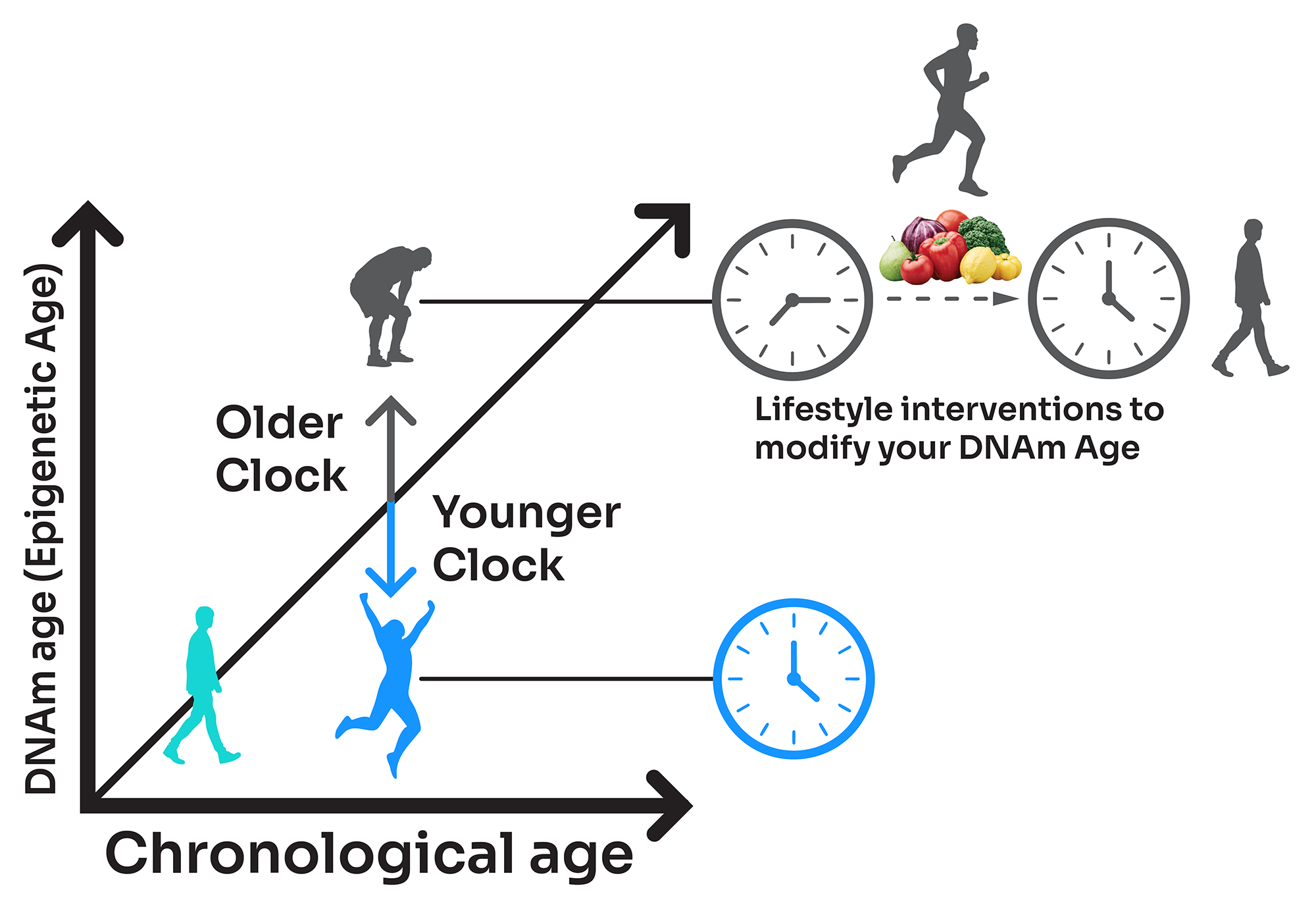
Age Acceleration Concept
Age acceleration = DNAm Age – Chronological Age
Positive acceleration indicates premature aging and is associated with increased mortality risk, higher incidence of age-related diseases, reduced cognitive function and healthspan, and predictive value for disease onset before symptoms appear.
Applications in Longevity Research
- Intervention efficacy assessment (exercise, diet, pharmaceuticals)
- Personalized aging trajectory monitoring
- Identification of individuals at high risk for age-related disease
- Drug development and clinical trial biomarker validation
- Geroscience research on aging biology
Ellis Bio SuperMethyl™ Kits for Epigenetic Aging Research
SuperMethyl™ Max Kit – For High-Sensitivity Aging Studies
Precision in Aging Clock Development: Complete and sequence bias-free C-to-T conversion enables reliable detection of subtle methylation changes across hundreds of CpG sites critical for epigenetic clock calibration. High Reproducibility: Ultra-mild conditions ensure consistent results across replicates, essential for longitudinal aging studies and intervention trials. Best For: Epigenetic clock validation, aging intervention studies, and large-scale cohort analyses requiring high accuracy.
SuperMethyl™ Fast Kit – For Large-Scale Aging Cohorts
With a total workflow under one hour, the Ultra-Fast conversion chemistry enables rapid processing of hundreds of samples, ideal for population-scale aging studies. Reproducible C-to-T conversion and high-yield recovery enable confident comparisons across study arms. Best For: Population-level aging studies, longitudinal cohorts, and research demanding speed for processing thousands of samples.
References
- Fransquet PD, Wrigglesworth J, Woods RL, et al. The epigenetic clock as a predictor of disease and mortality risk. Clin Epigenetics. 2019. doi: 10.1016/j.arr.2022.101743.
- Duan R, Fu Q, Sun Y, et al. Epigenetic clock: A promising biomarker and practical tool in aging. Ageing Res Rev. 2022. doi: 10.1016/j.arr.2022.101743.
- Teschendorff AE, Horvath S. Epigenetic ageing clocks: statistical methods and emerging computational challenges. Nat Rev Genet. 2025. doi: 10.1038/s41576-024-00807-w.
- Tong H, Dwaraka VB, Chen Q, et al. Quantifying the stochastic component of epigenetic aging. Nat Aging. 2024. doi: 10.1038/s43587-024-00600-8.